Male chastity survey: satisfaction soars when she runs the show

In September I launched the male chastity survey, 219 answered, this article shares the results and what I make of it.
The short version: three in four say chastity has been good for the relationship. The long version is more interesting, because it tells you exactly when it is good, and when it is a man’s hobby with a woman’s name on it.
He brought it up
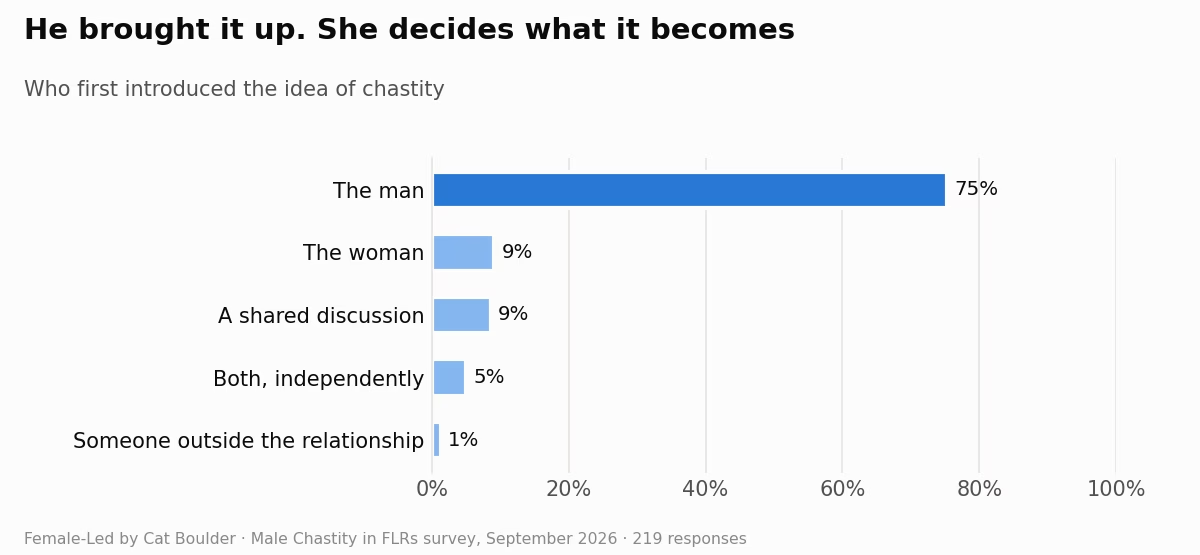
Three times out of four, the man raised it first. The woman did in 9% of cases, and a shared conversation got there in another 9%.
Nobody should be surprised. He has been thinking about it for years, quietly, in the gaps of a working week. He arrives at the conversation with a device already bookmarked and a speech rehearsed in the car.
None of that makes it his. He asked for it, which makes him the applicant. What it becomes, how long he wears it, what earns him out and what keeps him in, is hers to decide. The rest of this survey is, one way or another, about whether she does.
Weeks, not hours
Just over half of you currently use a physical device. Another 23% practise denial without one, which I rather admire: a man kept by instruction alone has understood the assignment.
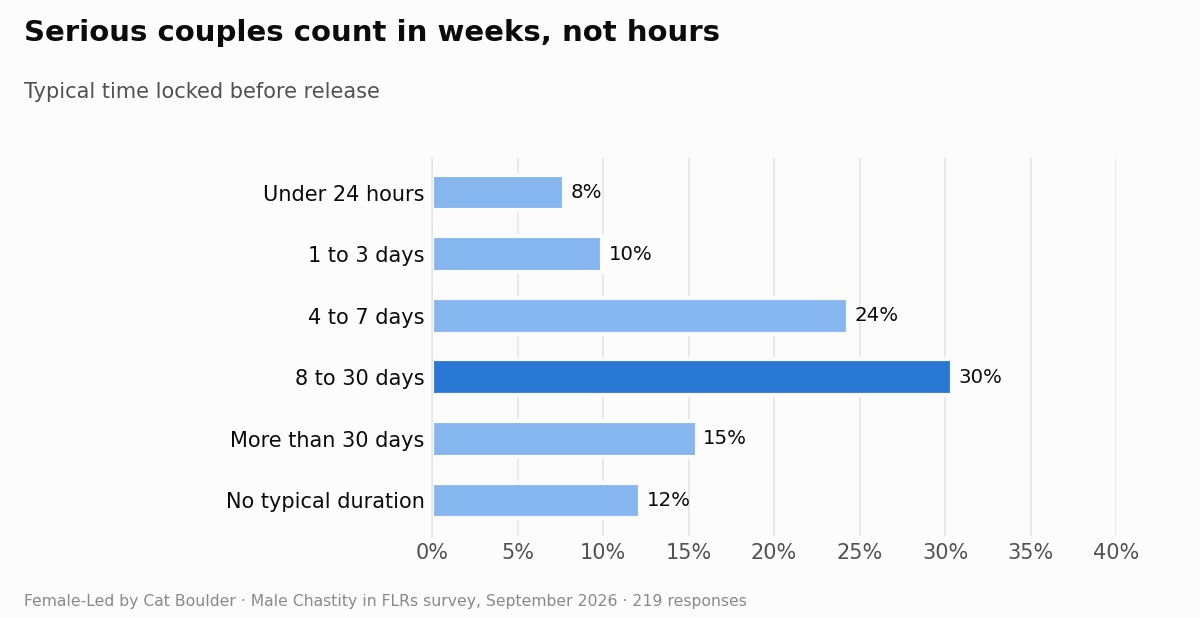
Among those who lock, the most common stretch before release is eight to thirty days. Nearly half go longer than a week, and 15% go past a month. Fewer than one in ten release him within a day.
A day is a costume. A month is a regime. Somewhere around the second week the lock stops being an event and becomes the weather of the house. He stops mentioning it and starts arranging himself around it. Her coat is taken before she has finished shrugging it off. The bins go out without a word. His attention, which used to wander, settles on her and stays there.
What the lock does to him
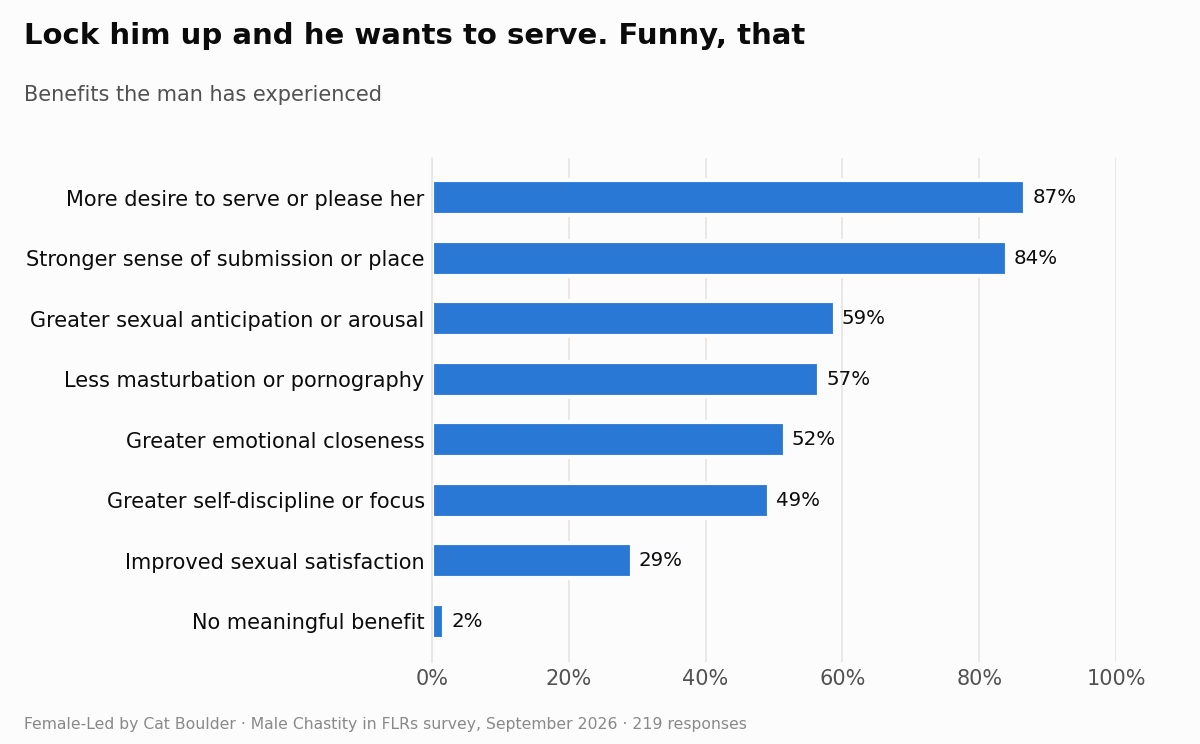
Eighty-seven per cent report more desire to serve or please her, and 84% a stronger sense of his place. Fifty-seven per cent say it has cut down masturbation and pornography, and nearly half report more self-discipline and focus.
Read that list again. A man with his pleasure locked away, and the key resting somewhere near her collarbone, becomes more attentive, more useful and more hers. Nobody had to lecture him. His desire, once spent privately and to no purpose, now has one direction and one destination.
Only 29% report better sexual satisfaction for themselves. Entirely correct. It was never about his satisfaction, and the men who answered seem to know it, and to be thriving on it.
What she gets
Here is where it gets delicious.
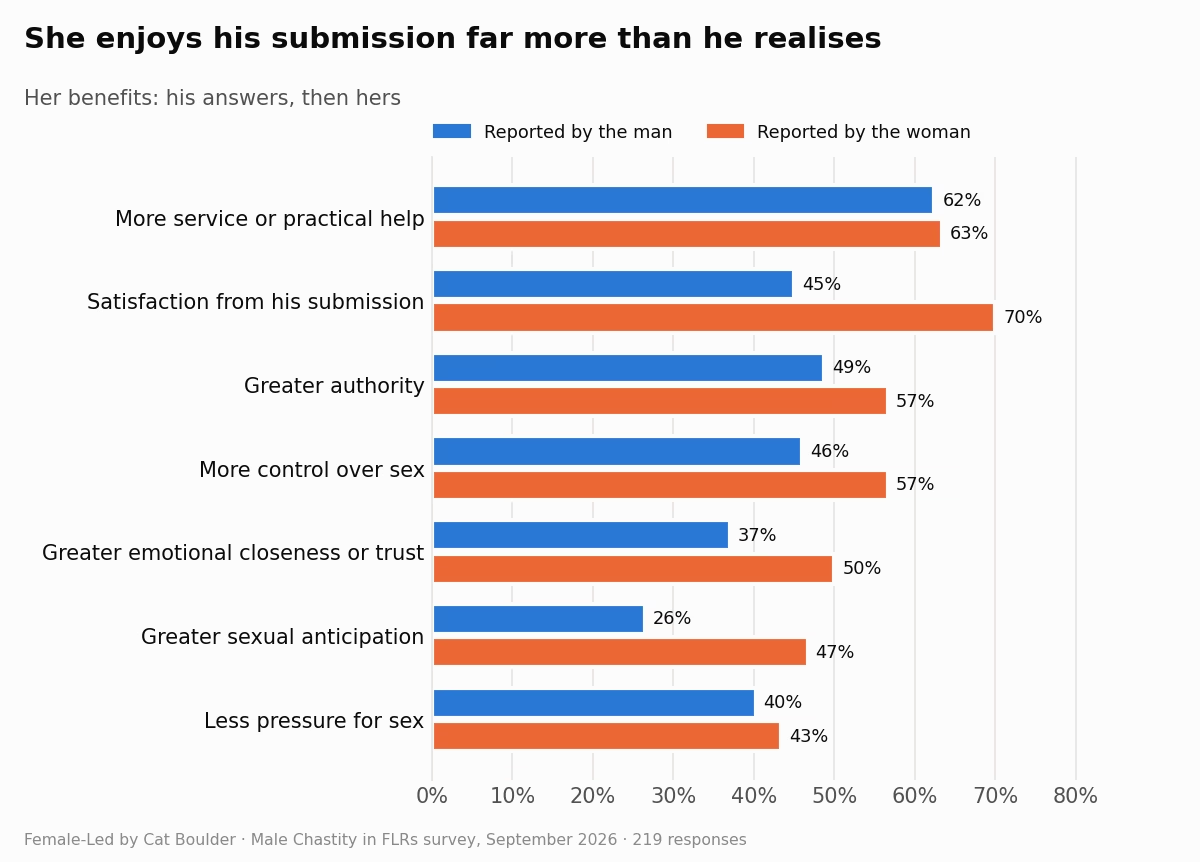
The benefits to her are handsomely practical. Sixty-three per cent name more service and attention, and half name greater authority. Nearly half name more control over when sex happens and what it is, and 41% name less pressure for it. A locked man does not sulk his way towards the bedroom. He waits to be sent for.
Now split the answers by who gave them. When men describe what she gets, 45% list satisfaction from his submission. When women answer for themselves, 70% do. Men put her sexual anticipation at 26%; women put it at 47%.
He thinks she tolerates it for the tidy kitchen. She is enjoying him on his knees rather more than she has told him, and possibly more than she has told herself.
What it costs
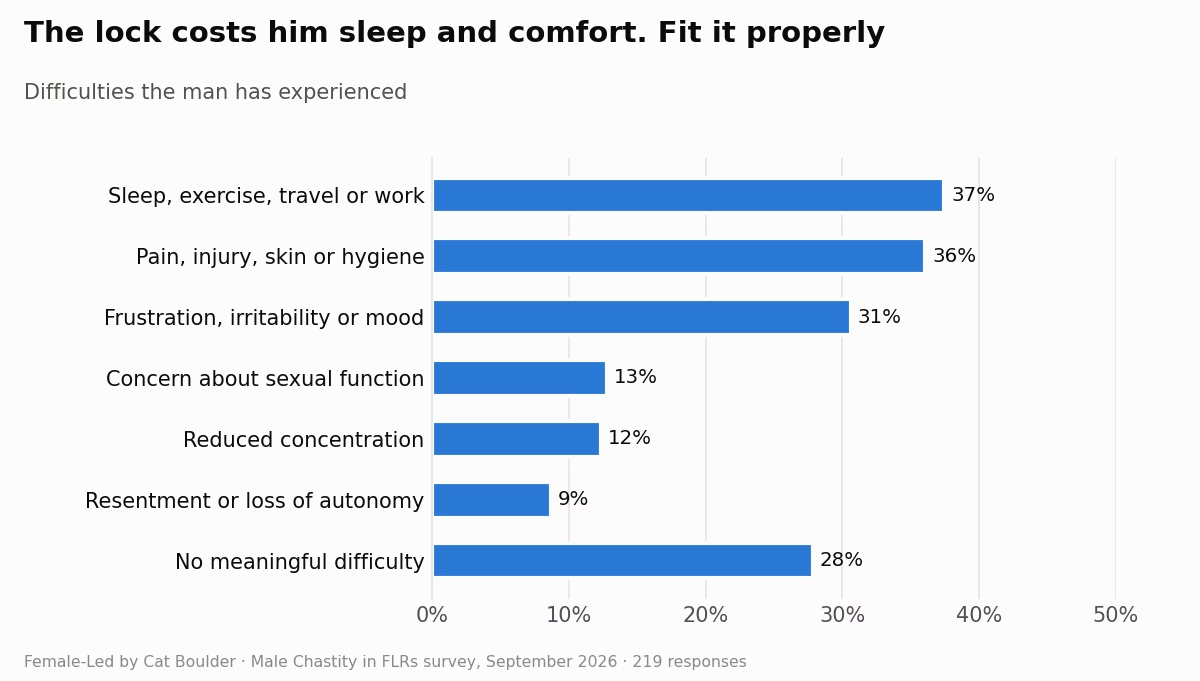
More than a third of respondents report trouble with his sleep, exercise, travel or work. Another third report some pain, injury, skin irritation or hygiene trouble. Nearly a third report frustration or moodiness, which is, frankly, the lock doing its job. Only 9% report resentment or an unwanted loss of autonomy.
The practical conclusion is not delicate. A device that hurts is the wrong device or the wrong fit, and it comes off today, not after the weekend. A man in pain is not serving; he is enduring, and endurance is dull to watch. Keeping it clean is his job, every day, without a reminder. The lock is hers. The upkeep is his.
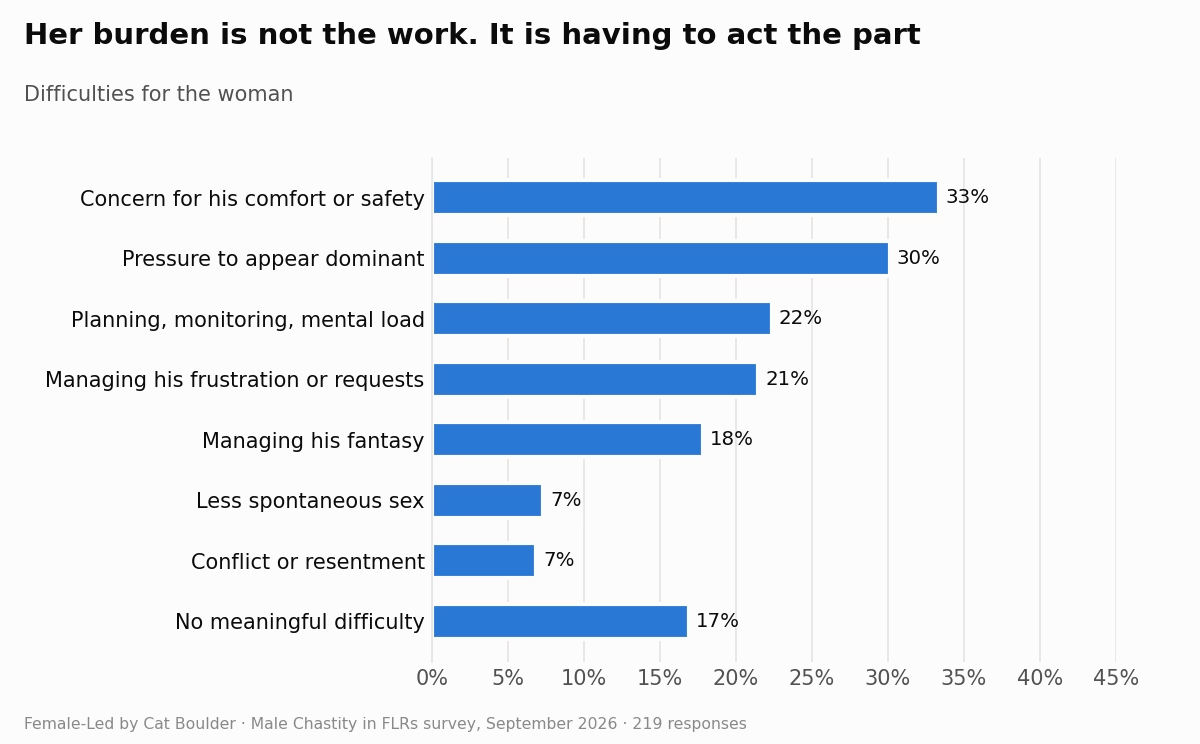
Her costs are more interesting. A third say she worries about his comfort and safety, which is what a good keeper does. Thirty per cent report pressure on her to appear dominant or enthusiastic. About a fifth name the planning and mental load, and a similar share the business of managing his frustration and his requests for release. Eighteen per cent say she feels she is being asked to manage his fantasy.
Notice what is missing: the work itself. Seven in ten say managing chastity costs her almost nothing, or a small amount she considers worthwhile. Only one in twenty call it more burden than benefit.
So the problem is not effort. It is performance: the sense of playing a part in his script, on his cue, with his reviews to follow. Which brings me to the finding that matters most.
She runs the show
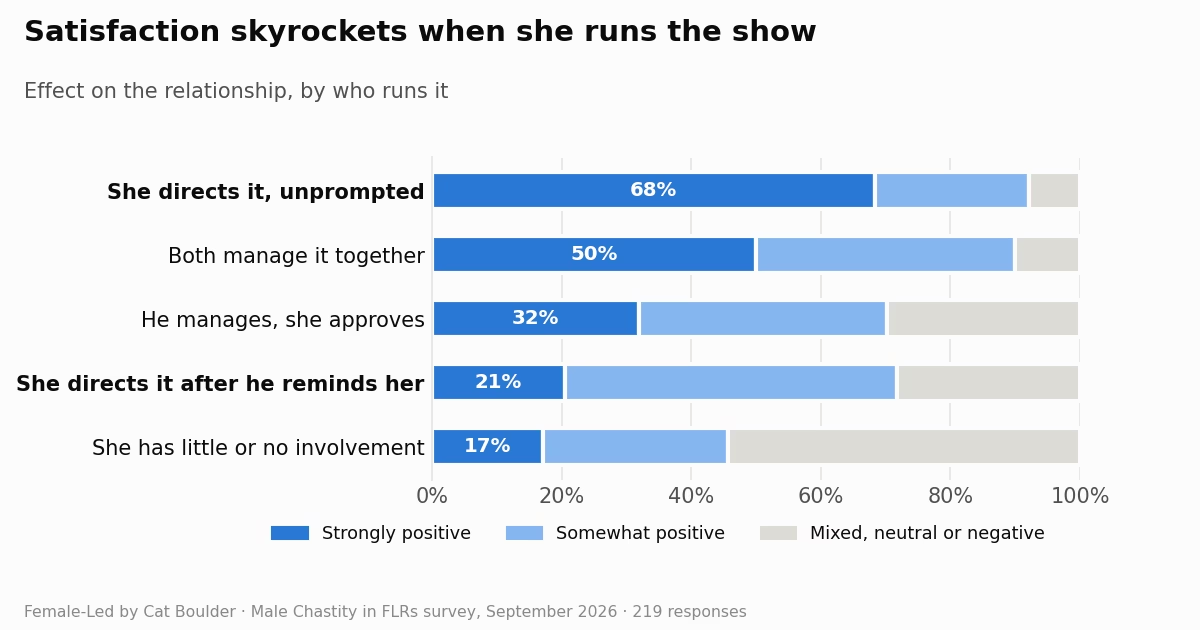
We asked how involved she is, and the answers split the survey in two.
Where she starts and directs chastity without being reminded, 68% call the effect on the relationship strongly positive. Where she directs it only after he asks or reminds her, the figure falls to 21%. That is lower even than couples where he runs the whole thing and she simply signs it off (32%).
Being reminded is the worst position of all. She holds the key but not the calendar, and both of them can feel it. He asks, she answers, and what should be his surrender becomes his project. The lock has turned into an appointment he books with her.
You are intelligent, so you are already thinking that correlation is not causation. Correct: she may take charge because it is already working. But look at the burden she named. Where she runs it unprompted, only 5% say she feels she is managing his fantasy. Where he has to remind her, 36% do. Once the decisions start with her, the lock stops being his idea she carries out and becomes her rule he lives inside.
None of this means more work for her. The decisions are hers and the administration is his: the cleaning, the log, the reminders he sets for himself and never for her. His release depends on her standards, never on his nagging.
Gentlemen, the most submissive thing you can do this week is stop asking.
Lock him first
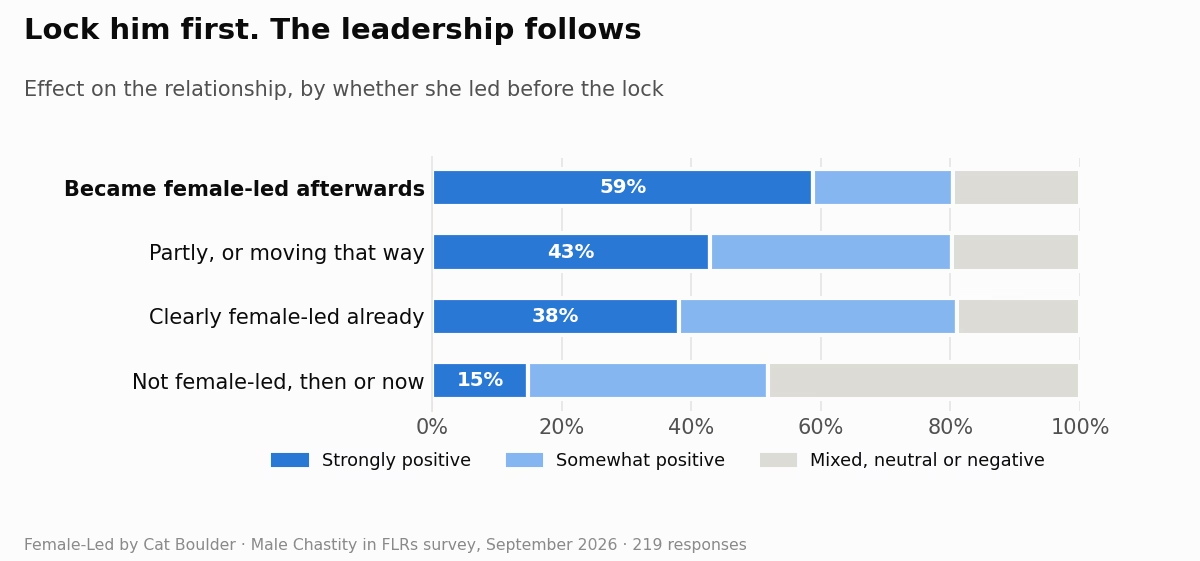
The received wisdom says build the female-led relationship first, and add chastity once it is established. Nearly a quarter of you did it the other way round.
Twenty-three per cent say their relationship was not female-led before chastity came up, and became female-led afterwards. That group reports the best outcomes of any starting point: 59% strongly positive. Couples who were already clearly female-led say 38%.
I think I know why. A lock is the one rule you can both see. It is there in the morning and still there at night. It gives her a real decision every few days, and him a real reason to earn her approval in between. Authority practised in one place has a habit of spreading: first the key, then the calendar, then his Saturdays, then rather a lot else.
It is not a magic trick. Where the relationship still is not female-led, only 15% are strongly positive. The lock opens the door. She still has to walk through it.
Just his kink?
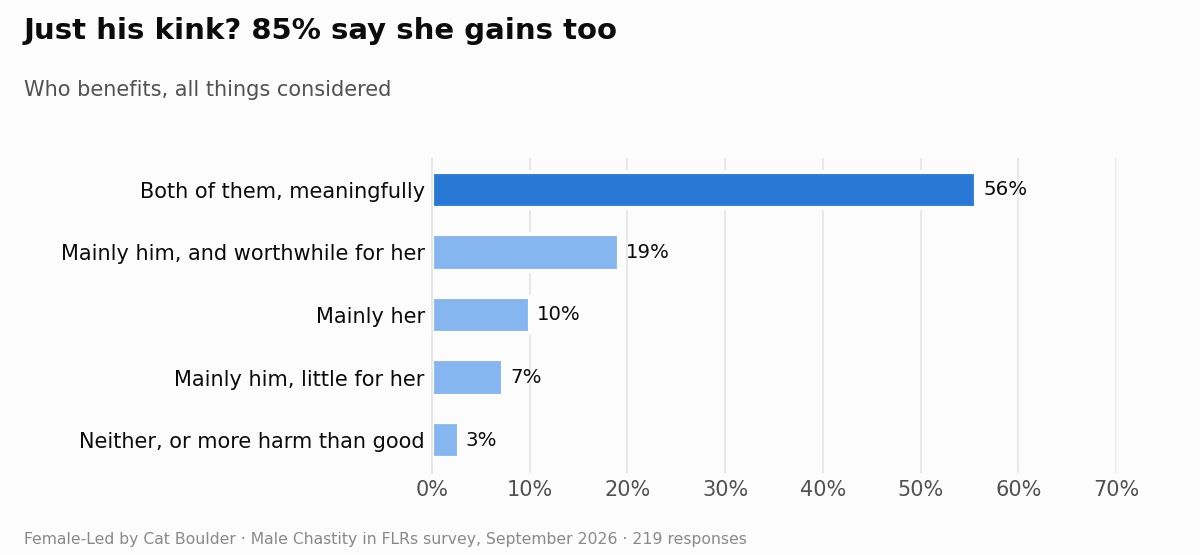
We finished by asking, all things considered, who benefits. Fifty-six per cent said both, meaningfully. Nineteen per cent said mainly him, but worthwhile for her too. Ten per cent said mainly her. That is 85% who say she gains something real. Seven per cent said mainly him with little for her, and 3% said neither, or more harm than good.
So the next time someone suggests chastity is his fantasy and your chore, you may smile and let them keep the theory. The couples living it say otherwise. It may have started as his idea. It becomes your authority, your pleasure, and a man more attentive than he ever managed while his desire was his own.
What happens next
In the meantime, it is Locktober, and there will never be a better month to begin. Take the key off its chain for a moment and look at it. Then decide, today, what the next thirty-one days of his life look like. Do not wait for him to ask. He has been waiting to be told.